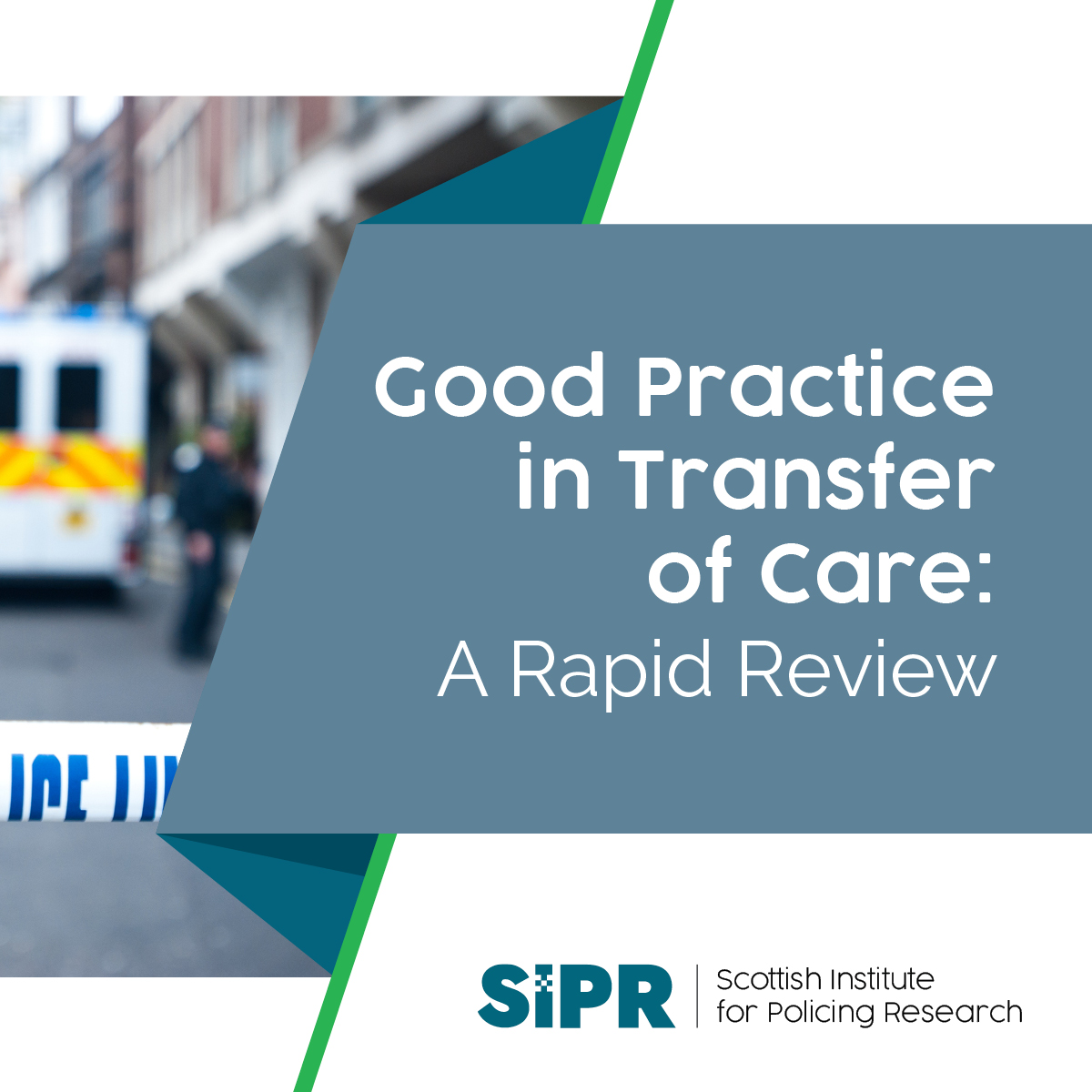
A new rapid review funded by the Scottish Institute for Policing Research has brought together international evidence on how police can better support people in mental distress. The study, carried out by researchers at Glasgow Caledonian University, the University of York, and the University of Edinburgh, looked at twenty-four peer-reviewed studies from the United Kingdom, Canada, Australia, the United States, the Netherlands, and New Zealand.
The review identifies four main approaches that are being used around the world to improve the transfer of care from police to health services:
• Co-response teams, where police work alongside mental health professionals during crisis call-outs
• Liaison models, led by specially trained police officers or healthcare responders
• Designated places of safety, offering alternatives to busy emergency departments
• Screening tools, which help first responders assess risks and decide on the most appropriate next steps
According to the studies, these models were linked to benefits such as reduced time in police custody, fewer emergency department visits, and better experiences for people in crisis. However, the review also points out major gaps in robust evaluation and highlights that the voices of people with lived experience are still missing from much of the research.
The authors underline several priorities for future work, including improving communication between services, clearer handover processes, better trauma-informed training, and ensuring that services meet the needs of all communities.
Dr Martha Canfield, lead author of the review, said:
“This review comes at a crucial moment for Scotland, as efforts are gathering pace to build a whole system approach to mental distress in our communities. To ensure people receive the right care at the right time, we need a clear understanding of how police and health services can work together more effectively. Getting this right can make a real and lasting difference to people’s lives.”
Overall, the review offers timely evidence to support ongoing work in Scotland to strengthen mental health crisis pathways and help ensure people receive the right care, in the right place, at the right time.
Review full report here
Review Briefing Summary here